



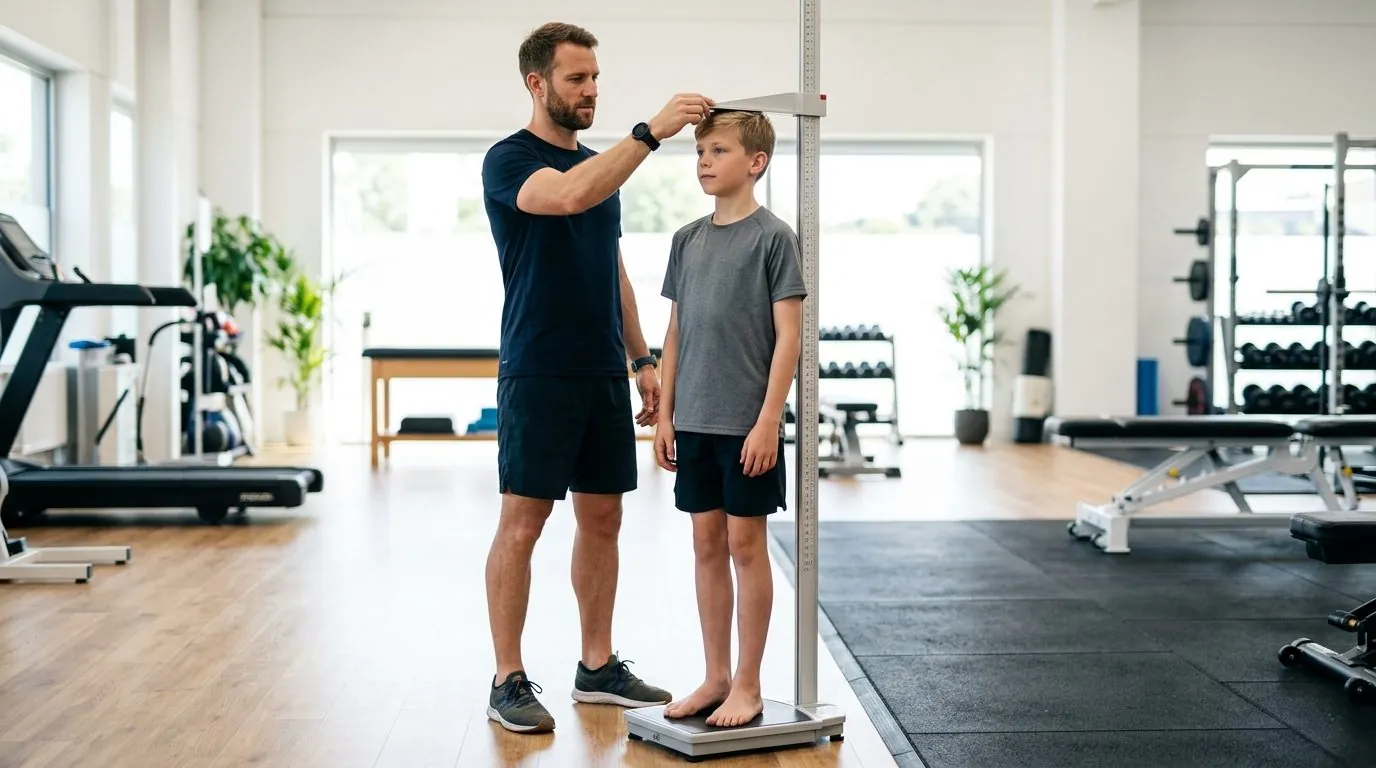
The APS method
Know. Assess. Improve. A multidisciplinary approach to reading athletes’ growth and performance with standardised criteria.
Standard in method, personal in outcome
Every athlete has different characteristics and follows an individual path of maturation. APS values these differences through measurements, structured observation and longitudinal analysis: the method is the same for everyone, the outcome describes the individual.
The APS symbol expresses this idea: the Λ represents the method, stable and standard; the Δ represents the measured change, that is, the athlete’s progress between two assessments.
The principles of the method
Multidisciplinarity
Physical development, posture, movement, technique, tactics and behaviour read together.
Standardisation
The same criteria and matrices make assessments comparable.
Reading over time
What matters is the change between two assessments, not a single figure.
Respect for growth
Chronological age and biological maturation may not match: growth data help read performance in the right context.
Support, not replacement
Indices guide the staff; decisions remain with the professionals.
Each athlete against themselves
The main comparison is with the same athlete’s previous assessments, not a ranking among young players.
From data to action in 5 phases
The process through which APS turns staff observations into information that supports decisions.
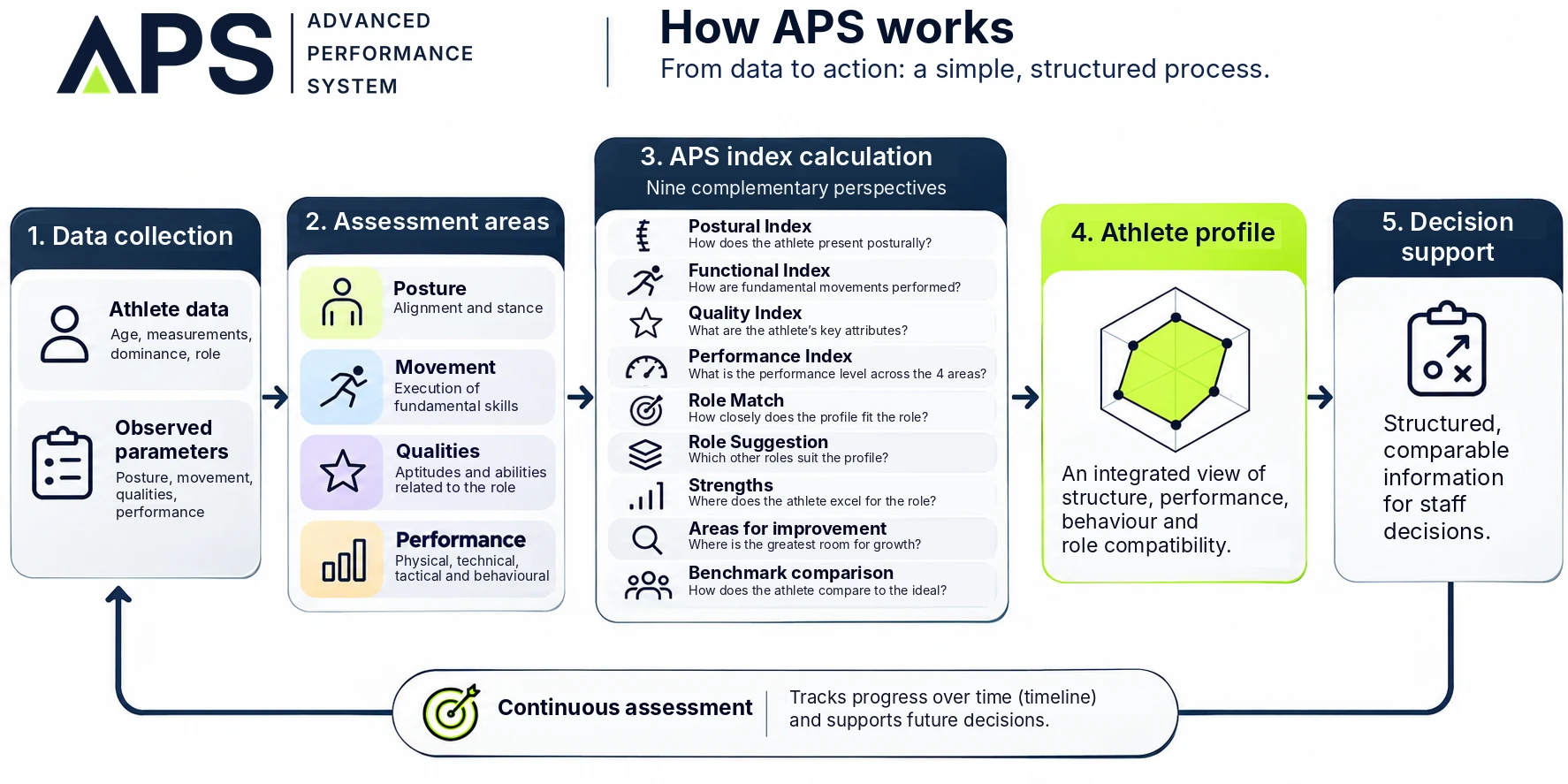 (opens the diagram at full size in a new tab)
The 5 phases of the APS method (text version of the diagram)
- Data collection. Athlete data (age, measurements, dominance, role) and observed parameters on posture, movement, qualities and performance.
- Assessment areas. Posture (alignment and stance), movement (execution of fundamental skills), qualities (aptitudes and abilities related to the role) and performance (physical, technical, tactical and behavioural aspects).
- APS index calculation. Four summary indices – Postural Index, Functional Index, Quality Index and Performance Index – from which Role Match (how closely the profile fits the role) and Role Suggestion (which other roles suit the profile) are derived, together with strengths, areas for improvement and a comparison with the role’s reference profile.
- Athlete profile. An integrated view of structure, performance, behaviour and role compatibility.
- Decision support. Structured, comparable information for staff decisions, with continuous assessment tracking progress over time.
What the APS indices measure
Observations are recorded on a common 0 to 3 scale (0 insufficient, 1 fair, 2 good, 3 excellent) and expressed as a percentage so the indices can be compared.
| Index | What it collects | Which question it answers |
|---|---|---|
| Postural Index | Cervical alignment, shoulder symmetry, clavicle alignment, scapular position, cervical, thoracic and lumbar spine, pelvis, hip and ankle alignment (10 parameters). | How does the young player present posturally? |
| Functional Index | Squat, overhead squat, lunge, left and right single-leg stance (5 tests), rated on a 0–3 scale. | How do they perform fundamental movements? |
| Quality Index | Qualitative assessment of technical performance, tactical intelligence and sporting mindset, on a 0–3 scale, with customisable matrices. | What characteristics and aptitudes does the athlete show? |
| Performance Index | 29 parameters observed by coaches across 4 areas: physical-athletic (8), technical (11), tactical (6), behavioural (4), on a 0–3 scale. | What is the level of performance in the 4 areas? |
| Role Match | Comparison between the athlete’s profile and the role’s reference matrix. | How closely does the profile fit the role? |
| Role Suggestion | Comparison of the profile with the matrices of all roles; up to three alternative roles. | Which other roles suit the profile? |
The weights with which areas contribute to the indices are part of APS know-how and are not published. Qualitative and role matrices can be customised by the club.
How to read an APS profile
A demo example with fictitious data: athlete A., aged 12, Esordienti (Under 13) age group, main role right winger.
| Index | Pre-season | Mid-season | Change |
|---|---|---|---|
| Postural Index | 82% | 88% | +6 |
| Functional Index | 78% | 84% | +6 |
| Quality Index | 87% | 90% | +3 |
| Performance Index | 82% | 86% | +4 |
| Role Match · right winger | 88% | 91% | +3 |
Staff interpretation
- Improvements: all indices have increased since the start-of-season assessment; the biggest gains are in posture and movement quality.
- Area to watch: on left single-leg stance the score remains lower than on the right; staff add stability exercises and recheck at the end-of-season assessment.
- Context: over the same period height increased noticeably; performance is interpreted taking the growth phase into account.
- Role: Role Match confirms compatibility with the current role; Role Suggestion indicates attacking midfielder and striker as alternatives to observe in training.
Decisions remain with the staff: the indices organise observations and make changes visible.
The method’s scientific references
The APS method draws on established principles of youth sport science. The publications listed describe these principles; they do not constitute a scientific validation of APS, which would require dedicated studies.
Growth and biological maturation
Athletes of the same age can be at different stages of maturation; estimating maturation from anthropometric measurements and bio-banding are the most discussed tools.
- Malina RM, Cumming SP, Rogol AD, Coelho-e-Silva MJ, Figueiredo AJ, Konarski JM, Kozieł SM. Bio-banding in youth sports: background, concept, and application. Sports Medicine. 2019;49(11):1671–1685. doi.org/10.1007/s40279-019-01166-x
- Cumming SP, Lloyd RS, Oliver JL, Eisenmann JC, Malina RM. Bio-banding in sport: applications to competition, talent identification, and strength and conditioning of youth athletes. Strength and Conditioning Journal. 2017;39(2):34–47. researchportal.bath.ac.uk/en/publications/bio-banding-in-sport-applications-to-competition-talent-identific/
- Mirwald RL, Baxter-Jones ADG, Bailey DA, Beunen GP. An assessment of maturity from anthropometric measurements. Medicine & Science in Sports & Exercise. 2002;34(4):689–694.
- Khamis HJ, Roche AF. Predicting adult stature without using skeletal age: the Khamis-Roche method. Pediatrics. 1994;94(4):504–507. pubmed.ncbi.nlm.nih.gov/7936860/
- Helsen WF, van Winckel J, Williams AM. The relative age effect in youth soccer across Europe. Journal of Sports Sciences. 2005;23(6):629–636. doi.org/10.1080/02640410400021310
Long-term athletic development
Structured, evidence-based programmes adapted to age and maturation.
- Lloyd RS, Cronin JB, Faigenbaum AD, Haff GG, Howard R, Kraemer WJ, Micheli LJ, Myer GD, Oliver JL. National Strength and Conditioning Association position statement on long-term athletic development. Journal of Strength and Conditioning Research. 2016;30(6):1491–1509. pubmed.ncbi.nlm.nih.gov/26933920/
- Lloyd RS, Oliver JL. The Youth Physical Development Model: a new approach to long-term athletic development. Strength and Conditioning Journal. 2012;34(3):61–72. doi.org/10.1519/SSC.0b013e31825760ea
- Lloyd RS, Oliver JL, Faigenbaum AD, Myer GD, De Ste Croix MBA. Chronological age vs. biological maturation: implications for exercise programming in youth. Journal of Strength and Conditioning Research. 2014;28(5):1454–1464. doi.org/10.1519/JSC.0000000000000391
Measurement reliability
Why standardised protocols and shared criteria are needed to compare assessments over time.
- Hopkins WG. Measures of reliability in sports medicine and science. Sports Medicine. 2000;30(1):1–15. doi.org/10.2165/00007256-200030010-00001
An integrated approach
APS was created by combining sporting expertise, athletic training, kinesiology, functional assessment, technical analysis and software development.
The goal is to support every young athlete in mindful, sustainable and personalised growth, giving staff structured tools for interpretation.
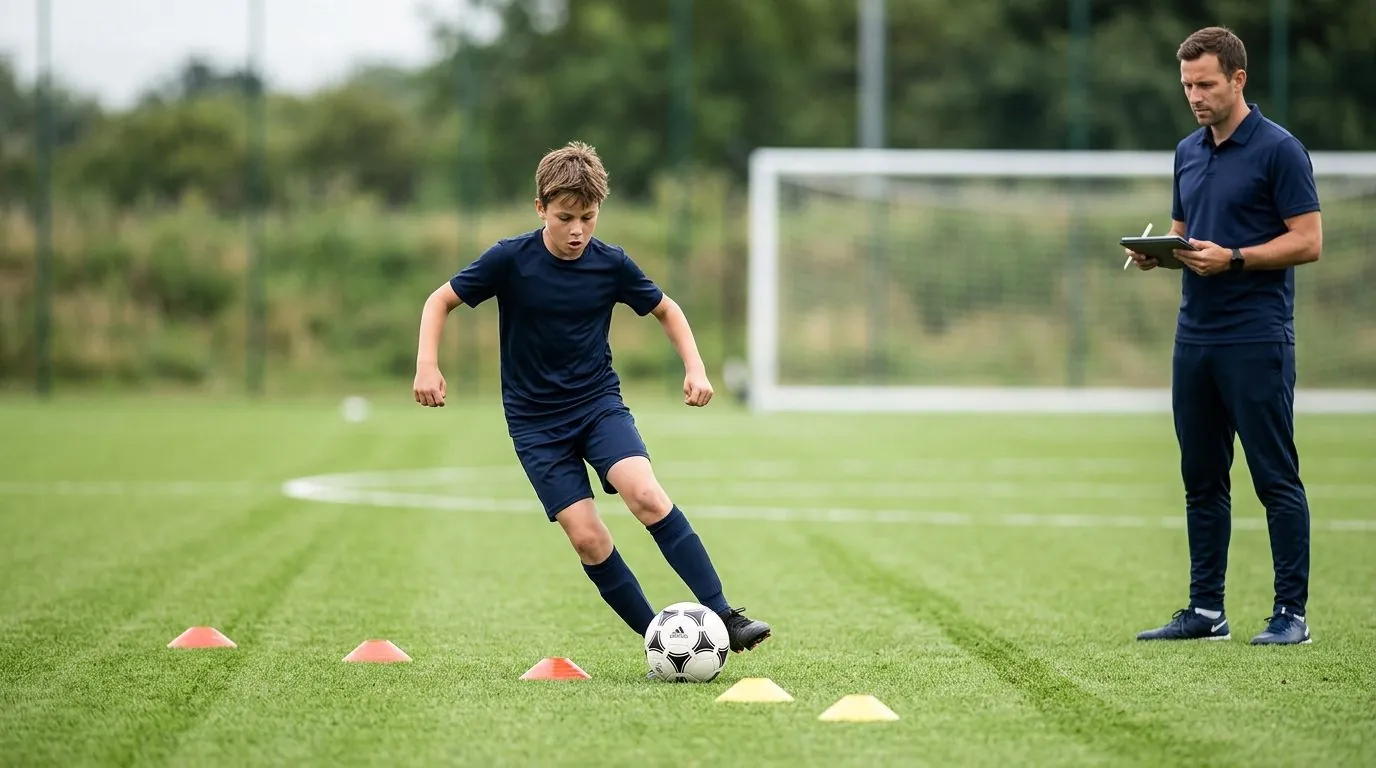
Know. Assess. Improve.
Find out how APS can support your club’s staff with a structured method and data that can be compared over time.